I’ve spent a LOT of time and money researching/comparing/buying/using various tools, and my friends often ask me for tool recommendations. Here is the list of tools that I own, prefer, and use regularly.

Buy nice or buy twice. I’ve owned and upgraded from a lot of inferior tools and wasted more money than if I just bought the good ones in the first place. So, these recommendations tend toward “the absolute best” rather than “best value for money”. Compromises may be made for compactness and ease of use, but usually not for affordability alone. That said, favoritism toward higher-end tools is always justified in terms of functionality rather than simply by brand perception.
The Amazon links earn me a small commission through Amazon Associates at no cost to you.
Last updated: 2025.10.25
Preface on Power Tools
You’re not just buying a power tool — you’re buying into a power tool ECOSYSTEM.
Consolidate your power tool selections under 1 or 2 brands/battery systems, so you can buy and carry fewer batteries and chargers.
Don’t underestimate the smaller 12V tools. Advances in lithium batteries and brushless motors have made them comparable to 18V tools from 10 years ago. Unless you’re building houses every day, they’re capable enough while being much more maneuverable and comfortable to use.
- The most comprehensive catalog of tools — spanning construction, automotive, fabrication, and more. Counterexample: Bosch doesn’t offer a 12V cordless ratchet or 12V drill with a 1/2″ chuck.
- Their ≤3Ah batteries insert inside the tool’s handle like a pistol magazine, making the tool more compact. Counterexample: DeWalt’s 12V batteries are bricks that stick out the bottom of the handle.
- Every tool in the M12 lineup is the best or near-best in power-to-size ratio.
Yet, my most-used power tool is a Bosch. I’ll explain why later.
Many power tools come in kits that include a charger and a basic battery. Some of these kit batteries are inferior in terms of capacity and or power output and may limit the performance of more power-hungry tools like drills or circular saws. I recommend buying the bare tool instead and getting the High Output CP2.5 and XC5.0 batteries, which have the best combination of power and energy density.

These are tools that I not only keep around the house for everyday repairs, furniture assembly, etc., but also bring with me every time I go to a friend or client to do home networking/home automation/smart home/AV/home theater/home security or general handyman-type work.
My projects in this area are diverse instead of specialized in a specific trade, so I often must prioritize maximum versatility and “functionality per cubic centimeter” over “hours of work saved per dollar of tool”. Example: preferring stubby nut driver bits (able to store more sizes in toolbox) instead of a set of whole nutdrivers (less time wasted on changing bits).
🪛 Manual Screwdrivers
Why you need one: You can turn faster and more easily with a ratcheting screwdriver.
Why I prefer this: It’s the best ratcheting screwdriver overall across these aspects:
- Stores 12 bits in the handle
- Very low ratcheting back-drag (able to ratchet even when screw is very loose)
- High magnetic bit retention strength
- Low ratchet arc swing (makes more progress on screw with fewer turns of handle)
- Shank has very little slop; very little backlash in locked (non-ratcheting) mode
| Status | Category last researched |
| Owned since Feb 2023 | Feb 2024 |

Why you need this: smaller screwdriver for more delicate work, like on screw terminals etc.
Why I prefer this: The genius “lollipop” handle gives it an unbeaten combination of speed, precision, compactness, and torque.
- Handle pulls out to the side for extra leverage.
- Red top is free to rotate when retracted, so you can “palm” the screwdriver quickly.
- Stubby screwdriver pairs great with long bits.
| Status | Category last researched |
| Owned since Feb 2023 | Feb 2024 |

Why you need these:
- Long and thin shank bits can reach deeply recessed screws or into very tight spaces.
- Ball-end hex bits allow you to drive hex screws at an angle.
| Status | Category last researched |
| Owned the 100mm ones since Mar 2021 | Feb 2024 |
I now think 75mm bits may be a more reasonable length instead, but I haven’t used them:
Why you need this: Make any screwdriver or long bit magnetic by sliding it in and out of the hole.
Why I prefer this:
- Compact
- Key ring enables me to hook this on my tool belt.
| Status | Category last researched |
| Owned since Jan 2024 | Jan 2024 |
🔧 Wrenches
Why you need this: for when there’s not enough space to fit a screwdriver, or when you need more torque
Why I prefer this:
- The head is only 14.8mm wide — one of the most compact. (But not too short like the 711L ratchet.)
- Comes with 16mm-long stubby bits (much shorter than standard 1-inch bits). From tip of bit to back of ratchet head is <17mm.
Alternative: VIM HBR3 is shorter and has a fixed non-ratcheting 1/4″ box end instead of the 5/16″ ratcheting. It’s a ratchet only and doesn’t come with bits.
VS MulWark MLK-53759 or KAIFNT K403: These ratchets have only 16 teeth, so the arc swing is very coarse.
VS BGS 115: BGS is only ~10mm from bit tip to back of head! But it has fewer ratchet teeth and less ergonomic.
| Status | Category last researched |
| Owned since Feb 2024 | Feb 2024 |

Why you need one (when you already have Knipex Cobra):
- Unlike the Cobras’ serrated jaws, these smooth jaws don’t mar fasteners.
- Slightly different hinge mechanism makes the jaws always stay parallel.
These qualities make this a true adjustable wrench replacement.
Why 150mm size:
- Slightly smaller than the Cobra sizes I recommended, because turning fasteners requires less grip force.
- Still enough leverage and jaw width (up to 27mm) for most fasteners you’ll see in a residential setting.
| Status | Category last researched |
| Owned since Feb 2024 | Feb 2024 |
Comparison: I once bought “ratcheting” adjustable wrenches thinking they’d be faster than pliers wrenches, but they instead take more time to adjust, are bulkier and more prone to slipping.
Why you need one: High-current breakers and receptacles need to be tightened to specified torque. Same for flare nuts.
Why I prefer this: Can swap heads between 3/8″ square drive (for sockets and bits) and open adjustable wrench (for flare nuts and nuts on threaded rods).
| Status | Category last researched |
| Owned since May 2024 | May 2024 |

Optional accessory: The included adjustable open wrench head is 5-30mm. If you need to turn nuts larger than 30mm, buy the separately-sold Yellow Jacket 60625 wrench head (8-41mm).

Why you need one: Use 1/4″ bits with your 3/8″-drive wrench.
Why I prefer this: Wera’s bit holders’ mechanism are easier to use one-handed. Simply push the bit into the holder and it locks. Pull the sleeve to unlock it, and it stays unlocked for you to pull the bit off.
| Status | Category last researched |
| Owned since May 2024 | May 2024 |

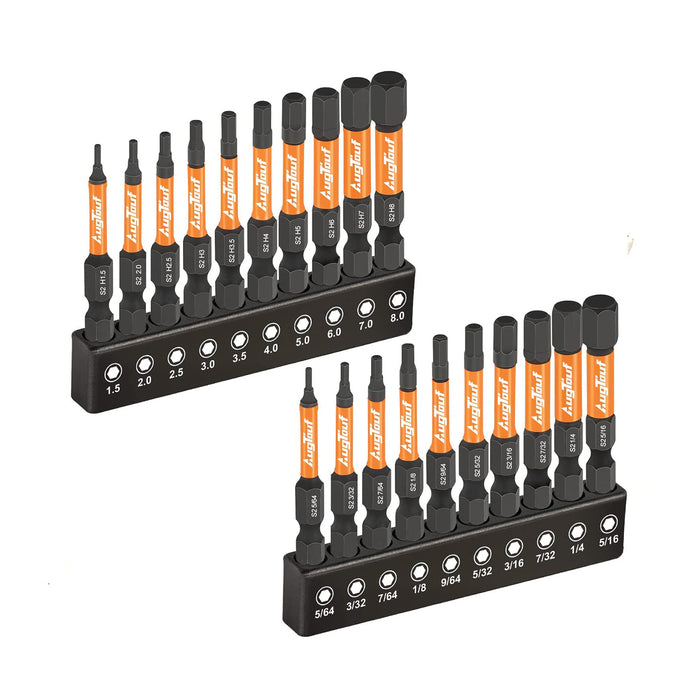
Why I like these:
- 2″ is the perfect length for recessed terminal screws of breakers etc.
- Flat tip (instead of ball tip) is important for higher torque.
- Much more versatile than allen keys.
| Status | Category last researched |
| Owned since May 2024 | May 2024 |
Why I like these:
- Nicely organized set of ratchets and sockets covering pretty all sizes you’d need for residential and small/mid-sized equipment.
- If you use the Packout system, this is a no-brainer.
| Status | Category last researched |
| Owned since 2022 | Dec 2024 |

🔫 Drills & Drivers
Why I prefer this: The most versatile for light-duty driving and drilling, with 4 interchangeable heads:
- 3/8″ drill chuck
- impact-style locking quick-change bit holder
- offset/eccentric holder for drilling/driving into tight corners without compromising tool angle
- right angle adapter — put bits OR the other 3 attachments on this!
Absolutely amazing for assembling furniture, mounting things to the wall, etc.
| Status | Category last researched |
| Owned since Jan 2021 | Feb 2024 |

All my other power tools are Milwaukee, why have this one Bosch tool?
- It’s noticeably smaller, and lighter than the Milwaukee 2505, Milwaukee FPDX, and every other installation driver. It’s basically as small as those cheap 4V cordless screwdrivers. This is critical for a tool that’s in my tool belt most of the time.
- Yet, it has as much torque (34Nm) as the others in the category.
- The attachments themselves are also shorter than the competitors’.
- Its direction switch is by the trigger like normal, whereas Milwaukee 2505 uses an unintuitive button on the top of the tool.
- Its clutch adjustment is very fine — the lowest torque setting is weak enough for wall outlet plate screws. This enables it to do delicate tasks otherwise reserved for manual screwdrivers.
Accessories: Sell the 2Ah batteries from the kit and get the 3Ah batteries instead.
Why you need one:
- 1/2″ drill chuck accepts bigger tooling (like hole saw arbors) that the 3/8″ Flexiclick can’t.
- Hammer mode for drilling into concrete/rock/masonry
- Significantly more power → higher torque at higher RPM → faster progress, especially with large hole saws and spade bits
| Status | Last researched |
| Owned since Sep 2023 | Latest generation as of Feb 2024 |
Distinction: make sure to get the 3404 instead of the 3403, which is the same tool minus hammer mode.
Why not a full-on rotary hammer? I also own a Milwaukee 2416 M12 rotary hammer. It drills faster into masonry than hammer drills, but it uses an SDS Plus chuck instead of a regular 3-jaw chuck, so it can’t use normal drill bits. It also has no adjustable clutch. I don’t drill big holes in concrete all day, so I carry the much more versatile hammer drill.
Why you need this: Since impact drivers deliver torque in pulses, they deliver much more torque than a drill, yet you feel very little reaction force through your wrist. Therefore, much less strain and fatigue. I use this whenever driving large/long screws into wood or breaking loose nuts/bolts.
| Status | Last researched |
| Owned since Nov 2022 | Latest generation as of Feb 2024 |
These 3 tools have some overlap, but they have different strengths. This is how my work is divided among them:
| Installation drill/driver | Hammer drill | Impact driver |
|---|---|---|
| Low torque | Medium torque | High torque |
| Finest control (very sensitive clutch, light tool) | Medium control (less sensitive clutch, heavier tool) | Less control (no clutch, light tool) |
| Furniture assembly Equipment installs General-purpose | Masonry drilling Hole saws Spade/auger/Forstner bits | Large/long fasteners Disassembly |
Why I prefer this:
- Has locking mechanism (not just magnet). Very important when using this to extend a hex-shank drill bit to drill through a wall. You don’t want the bit to detach and fall inside the wall (happened to me before).
- Slimmer outer diameter than other locking bit extenders
- Available in 12in, 6in, 3in lengths. The 3in one is not that meaningful, and you’re better off using some of these other bit holders below.
| Status | Category last researched |
| Owned since Mar 2023 | Mar 2023 |
Why you need one: Phillips screws fall off the bit easily. You need a way to retain them especially if you’re on a ladder and one-hand-operating the drill.
Why I prefer this: The ring magnet on this has a much smaller inner diameter than similar bits and bit holders from Wera, DeWalt, NEIKO and Norske. (I’ve tried them all. Definitely avoid the last 2 — bits get stuck in them.)
| Status | Category last researched |
| Owned since Jan 2024 | Feb 2024 |
Why you need one: This bit holder has a ring magnet just like the Metabo one above, but it holds various bits instead of being a fixed PH2.
Why I prefer this: Wera Rapidaptor bit holders are a bit nicer than other ones because when you pull the sleeve to unlock the bit, it stays unlocked. This allows you to remove the bit with one hand.
| Status | Category last researched |
| Owned since Jan 2024 | Feb 2024 |
Distinction: there are many other Rapidaptors, but only this one has the magnet ring.
Why I prefer this:
- Impact-style quick-change hex shank — no chuck needed, use in impact drivers etc.
- Includes 1/2″ size
- Longer than Milwaukee’s similar bits
| Status | Category last researched |
| I own instead the Milwaukee 48-89-4632 set and dislike how short they are. | Mar 2024 |
Why you need one: prevent drill bit walk (especially on metal/hard surfaces)
Why I prefer this: big round handle is comfortable for palm
| Status | Category last researched |
| Owned since 2018 | Feb 2024 |
Why you need one: Helps you drill straight (perpendicular) without a drill press
Why I prefer this: The holes are metal but the body is plastic, so it’s much lighter to carry around.
| Status | Category last researched |
| Owned since 2018 | Feb 2024 |
🔨 Prying, Hammering
Why you need one: Demolition screwdrivers can be used as a pry bar, chisel, punch, or even a hammer itself. They have a single steel body from the tip to the striking cap, so you’re not breaking the handle when hammering them.
Why I prefer this:
- It’s cheap yet no worse than the more expensive options. This is a tool that you should feel easy about replacing.
- The tip is magnetic.
- The flathead has a longer taper, which is better at wedging into gaps.
- You can wrench on the hex at the bottom of the handle.
Why not DeWalt DWHT65100: The flathead tapers to the full shank diameter too quickly (angle too obtuse).
| Status | Category last researched |
| Owned since Feb 2023 | Feb 2024 |
Why I prefer this: It’s the only hammer that meets all my requirements:
- Very large face (32mm)
- Very light (~640g) — the body is titanium and the replaceable face is steel
- Mallet caps (available separately) — no need to carry a separate mallet
Bonus: side nail puller (extra pulling leverage) and magnetic nail setter
This titanium hammer is so well-balanced and comfortable (low recoil and fatigue) that I get excited whenever there’s an opportunity to hammer something. I plan to use it for decades.
| Status | Category last researched |
| Owned since Sep 2023 | Feb 2024 |
✂️ Cutters & Pliers
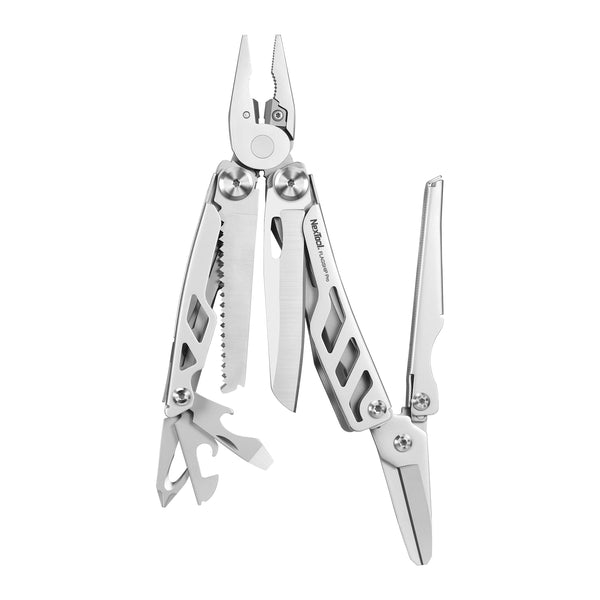
Why you need one: Multitools have the most diverse functions within 1 tool. Maximum utility carried in one pocket.
Why I prefer this:
- It’s one of the multitools with the largest scissors (approaching normal standalone scissors).
- Among those, it has the most useful tools:

| Status | Category last researched |
| Owned since June 2024 | June 2024 |
VS NexTool Black Knight: I also known the Black Knight. It’s slightly smaller and noticeably lighter than Flagship Pro. The handles are more skeletonized and the saw is pointier. It lacks the hook cutter, which I need for opening boxes while avoiding damaging contents.
VS Roxon S802 Phantom: I also own this one. It’s so wide that you can replace the knife element with a utility knife version that Roxon offers. You have to open up the pliers handles to access the scissors — this slows me down too much. Also, it lacks the hook cutter.
Why you need one: It cuts cardboard and clamshell packaging so much faster and easier than scissors!
Why I prefer this:
- Charges via USB-C
- Modular battery
- Potentially more powerful motor than some alternatives (not verified yet)
Alternative: WORKPRO W125199A, with USB-C charging but non-modular battery.
Why not Worx Zipsnip or Warrior (Harbor Freight 56192): These 2 are almost definitely the same tool from the same contract manufacturer with slightly different body styles. They both use a proprietary barrel jack charger.
Why not Makita PC01R3 or Skil ES4651A-00: These 2 are likely more powerful since they’re 12V, but the protruding battery makes them too bulky for my liking. They also require proprietary chargers.
Ultimately, all these power cutters are pretty similar, and having any one is a huge improvement over having none.
| Status | Category last researched |
| Not yet upgraded to Ryobi — I’ve had the previous-gen Worx Zipsnip (WX081L) since 2020. | Feb 2024 |

(180mm long and 250mm long)
Why I prefer this: One of these is more versatile than normal pliers and adjustable wrench combined.
- Adjustable jaw width from 0 to 50mm (big enough to grip kitchen sink fittings)
- V-groove serrated jaws can grip onto flat/round/square/hex/irregular objects.
- Less chance of slipping/rounding off bolts than adjustable wrenches, since you’re gripping and turning at the same time
- Button mechanism adjusts faster and finer than tongue & groove pliers (“Channellocks”)
| Status | Category last researched |
| Owned since Mar 2021 | Jan 2024 |
Why I prefer this: It’s high-quality (cutter closes tight, high hardness, low joint slop) lineman’s pliers and the only one with all these features:
- Screw extractor (vertical serrations)
- Flat + curved jaw
- Cutter
- Crimper
| Status | Category last researched |
| Owned since Feb 2023 | Feb 2024 |
VS Engineer PZ-58:
| PZ-58 | PZ-78 | |
| Spring-loaded handles | ✅ | ❌ |
| Crimper | ❌ | ✅ |
| Flat serrated jaw | Small flat aera | Large flat area (better for twisting wires etc) |
| Screw extractor jaw | Bigger | Smaller |
Why you need one:
- The most versatile power cutting tool. Cuts wood, metal, drywall, grout, and more.
- More agile and precise compared to any rotational tool or a reciprocating saw.
- Can cut flush to surface (such as protruding nails)
- Can be a sander too with sanding attachment
| Status | Category last researched |
| Owned since 2020 | 2020 |
Why you need one:
- Make curved cuts, beveled cuts, etc.
| Status | Category last researched |
| Owned brushed version since 2021. Owned Fuel version since Mar 2024. | Mar 2024 |
Why you need one:
- Make fast and straight cuts
| Status | Category last researched |
| Owned since 2021 | 2021 |
📐 Measurement & Inspection
Why I prefer this: It’s the only tape that meets all these requirements:
- BOTH centimeters and inches on BOTH sides of tape
- Only 5m/16ft instead of 8m/25ft (too bulky)
- Very long (16ft) reach (cantilevers far out without buckling)
Bonus: “finger stop” notch for easily controlling the tape with your finger. The traditional lock slider is more reliable than “auto-lock” mechanisms, which start to slip with wear.
| Status | Category last researched |
| Owned since Jan 2023 | Feb 2024 |
Why I prefer this:
- No calibration or moving needed: just hold it against the wall and push the button, and the LEDs show you where the stud is.
- Integrated bubble level
- Integrated pencil storage
- Live wire detector/indicator
- Has the most sensors (13) and LEDs (21) — finest resolution model
| Status | Category last researched |
| Owned since Jan 2023 | Feb 2024 |
Why I prefer this:
- You can flip the fence left, right, or flat! This is a gamechanger for measuring inside cabinets, in the middle of flat workpieces, etc.
- The newer SmartBubble version integrates a bubble level.
| Status | Category last researched |
| Owned since May 2024 | May 2024 |
Why I prefer this:
- Auto-rotating display (portrait & landscape), which most digital levels with segment LCDs don’t have
- Magnetic bottom face with V-groove (sticks to metal pipes etc.)
- 2D leveling (bullseye)
- Handy size (12cm-long)
| Status | Category last researched |
| Owned since Feb 2023 | Jan 2024 |
Laser Level: Huepar HM03CG
- 3× 360° laser planes. BTW, “plumb dot” is naturally included because it’s just the vertical planes’ intersection.
- Green laser for outdoor visibility
- More compact than 3-plane levels from Milwaukee, Bosch etc.
- Charges via USB-C
| Status | Category last researched |
| Owned since Jan 2024 | Jan 2024 |
Tripod (cheap option): Sensyne TR74s
- Very high extended length ÷ collapsed length ratio (74 inches to 18.8 inches)
- Pan/tilt head with independent control over each axis of rotation (preferred for laser levels)
- Rack & pinion center column for precise height adjustment
| Status | Category last researched |
| Owned since Jan 2024 | Jan 2024 |
Tripod (expensive option): 3 Legged Thing Bucky
- Folded length is only 16.14 inches, so it fits horizontally inside a Packout drawer.
- Max height 74.8 inches — humongous extension ratio thanks to 5-section legs and 3-section center column
- Can also serve as an excellent photography tripod
| Status | Category last researched |
| Owned since Jan 2024 | Jan 2024 |
Since it has a ball head (fast but imprecise) and no geared center column, it’s best used with a fine-adjustment bracket like below.
Fine-Tuning Adjustment Bracket: Huepar PV11
This is useful for dialing in the exact height of the laser, especially if your tripod doesn’t have a rack-and-pinion center column.
- 4 degrees of freedom: up/down, fore/aft, left/right translation plus pivot rotation
| Status | Category last researched |
| Owned since Jan 2024 | Jan 2024 |
⚡ Electrical
More Capable: Klein Tools CL800
Why I prefer this: It’s one of the most feature-rich multimeters, at a reasonable price.
- Measures current through wire by simply clamping around the wire. The clamp is also handy for hanging the tool while you’re probing.
- Measures both AC and DC current
- Measures temperature via thermistor probe
- Non-contact voltage detection feature
- Auto-ranging
- Capacitance test, diode test… all the features I’ve needed so far in a multimeter
- The mode knob is easy enough to turn with my thumb (single-handed).
| Status | Category last researched |
| Owned since Feb 2024 | Feb 2024 |

More Compact: Klein Tools CL390
Why I prefer this: Similar features to CL800, but significantly smaller and lighter.
| Status | Category last researched |
| Owned since Feb 2023 | Feb 2023 |
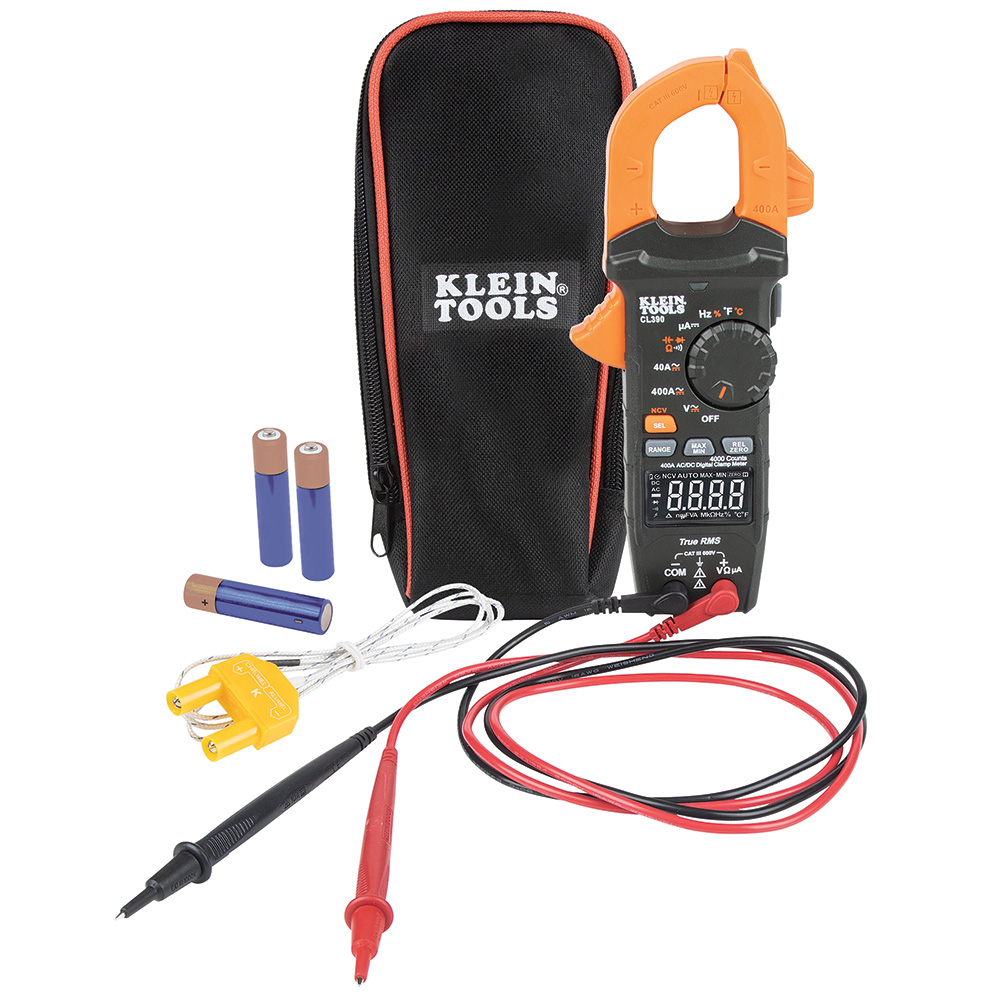
VS Klein CL900: CL900 can measure more current and inrush current, but it can’t measure temperature.
| CL390 | CL800 | CL900 | |
|---|---|---|---|
| Measures inrush current | ❌ | ❌ | ✅ 2,000A |
| Max current measurement | 400A | 600A | 2,000A |
| Measures temperature | ✅ -40° to 1000°C | ✅ -26°C to 538°C | ❌ |
Full Klein clamp meter comparison table
VS Fluke 325: 325 is Fluke’s most similar offering in terms of features. Fluke has the best reputation, and many electricians swear by them. On the other hand, Klein CL800 and CL390 have better specs while costing half/less than half.
| Measurement | Klein CL800 | Klein CL390 | Fluke 325 |
|---|---|---|---|
| Max resistance | 60MΩ | 40MΩ | 40kΩ |
| Max current | 600A | 400A | 400A |
| Max voltage | 1000V | 600V | 600V |
| Max capacitance | 6mF | 4mF | 1mF |
| Frequency | 1Hz – 500KHz | 10Hz – 60KHz | 5Hz – 500Hz |
| Non-contact voltage | ✅ | ✅ | ❌ |
Why you need these:
- Test whether outlets are wired correctly and working (including GFCI)
- Find which breaker is connected to the outlet in question by simply hovering the wand over the breakers. A lot less disruptive to other people in the house than turning off a bunch of breakers.
- Detect live voltage without touching the wire.
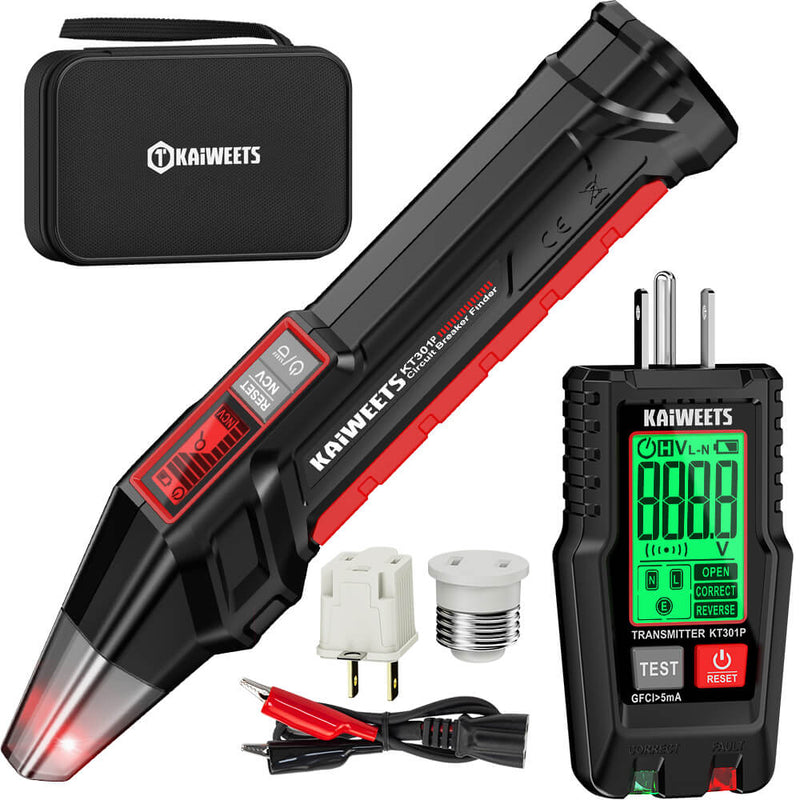
The Kaiweets KT301P is similar to the Klein ET310, but it has some additional useful features, so now I carry it in my tool bag instead of the Klein.
| Kaiweets KT301P | Klein ET310 | |
| Breaker finder also works as Non-Contact Voltage tester | ✅ | ❌ |
| Outlet tester retains reading after unplugging /shutting power | ✅ | ❌ |
| Outlet tester shows exact voltage | ✅ Identify abnormal voltage (like in phantom voltage or current leakage situations). | ❌ No numerical display of voltage, only pass/fail LEDs. |
| Outlet tester works without battery | ❌ | ✅ |
Disclosure: Kaiweets sent me a KT301P for free to try out, with no promises it would get recommended on this list.
VS Klein RT250: The RT250 can detect an open-neutral-open-ground fault (where only the hot wire is connected), which the KT301P and ET310 can’t. It’s purely an outlet tester and doesn’t work with the breaker finder, so I no longer carry it.
| Status | Category last researched |
| Owned KT301P since Sep 2025. Owned ET310 since Nov 2022. Owned RT250 since 2021. | Oct 2025 |
VS traditional wire strippers: Self-adjusting wire strippers grip the insulation with 2 jaws and pull it apart.
- No need to find the right-sized hole.
- Works on 10-24 AWG (very wide range).
- Works on non-round cables and multi-conductor cables (such as pulling off outer jacket of Romex).
VS other self-adjusting strippers: There are many similar wire strippers. Look for ones with:
- Adjustable tension
- Stop fence for controlling strip length
| Status | Category last researched |
| Owned since May 2021 | Feb 2024 |

Why another wire stripper? Since this one has a pistol grip, it requires less accessible wire length to work. For example, you can reach a too-short wire inside an outlet box with it.
Limitations:
- Max strip depth is ~18mm. Meanwhile, the Irwin’s pass-through design allows it to separate insulation at any point along a cable.
- V-notch blade only works on single round wires.
Because of these limitations, it can’t replace the Irwin. But since it’s super light, it doesn’t hurt to carry this as a secondary wire stripper for the 10% of problems the Irwin can’t solve.
| Status | Category last researched |
| Owned since Sep 2023 | Feb 2024 |

Why you might need one: Fish cables through walls and floors by tying them to this steel fish tape.
Why I prefer this: Pocket size, but 15ft is enough for fishing from an outlet to a light switch, or from crawl space to 1st floor.
| Status | Category last researched |
| Owned since 2020 | Mar 2024 |
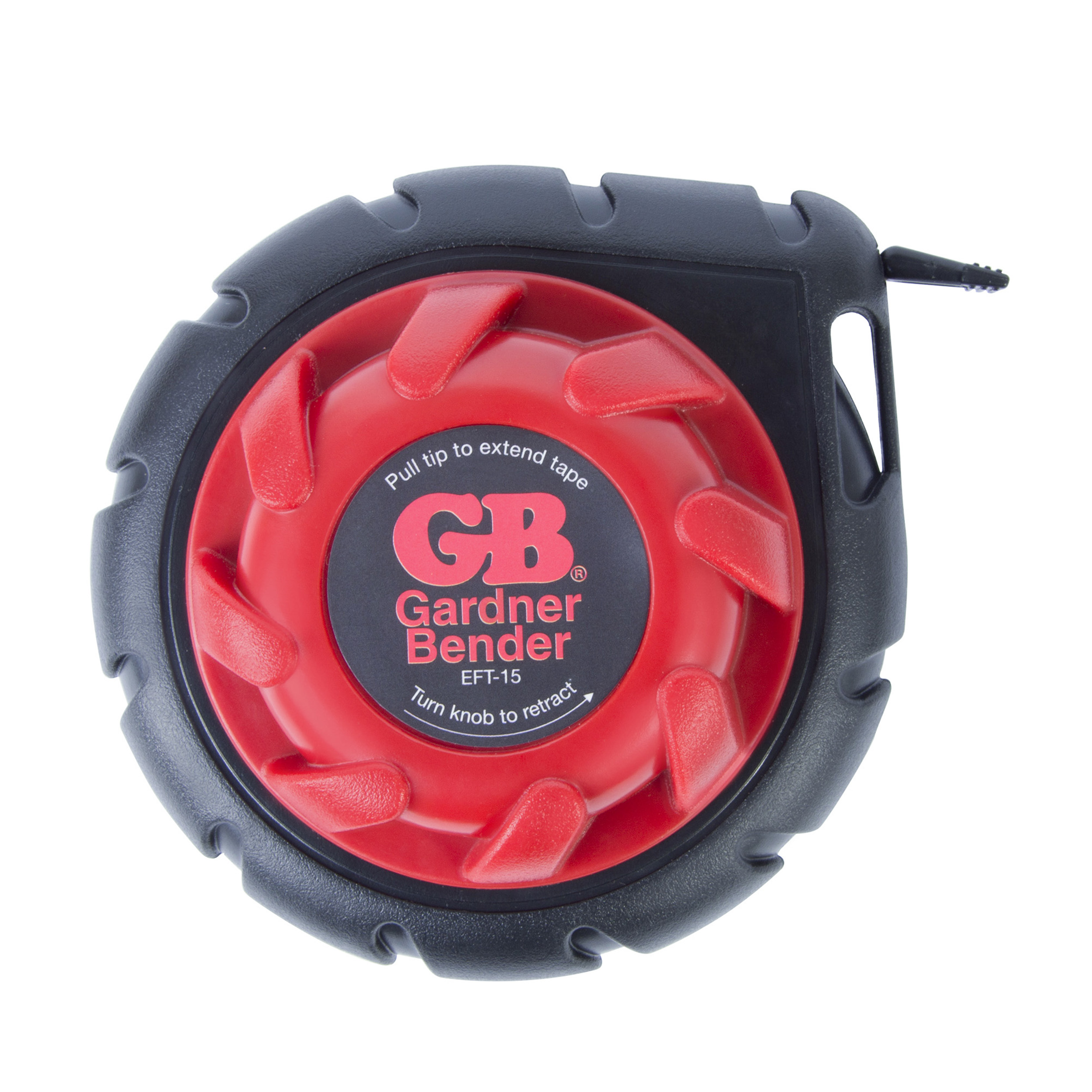
Comparison: Identical product (different rebrands) to Commercial Electric EFT-15 at Home Depot.
Why you might need one:
- Trace and identify Ethernet cables using toner wand or remote wire map dongles
- Identify RJ45 connector crimp errors (such as crossed wires)
- Measure length of cable in wall, ground etc
- Detect break or short in cable and at what distance the damage is
- Test what data rates the cable can achieve
Why I prefer this:
- The probe wand has both digital mode and analog mode. You don’t hear line noise in digital mode.
- The probe’s signal tone is a melody instead of a constant sine wave — easier to hear over noises.
- Tests cable for up to 10GBps — most other testers only go up to 1GBps.
- Tests PoE not just by checking voltage or advertised power, but by actual load testing
- Layer 3 tests like IP, DHCP and ping
- Big color touchscreen with iOS-like intuitive UI
| Status | Category last researched |
| Owned since Jun 2023 | Jun 2023 |


Accessories:
| Purpose | Accessory |
|---|---|
| Trace/measure coaxial TV cable | coax to RJ45 adapter |
| Trace/measure unterminated wire such as thermostat wire, bare CAT6 cable, alarm sensor wire | alligator clips to RJ45 adapter *Cable length measurement doesn’t work with alligator clips. RJ45 spring terminal adapter *When a cable has many conductors, the toner signal is stronger when you put all conductors in the terminals. |
| Identify multiple male RJ45s (the cable ID dongles are male) | female-female RJ45 couplers |
| Workflow efficiency | retractable Ethernet cable |
Cheaper alternative: I also have a Klein Tools Scout Pro 3 (VDV501-851). It doesn’t test PoE, speed, or IP; its toning is analog and monotone; and the 7-segment style display is harder to interpret. LinkIQ has saved me a lot of time compared to Scout. But Scout comes with more coax ID dongles, so it’s likely better for cable company technicians.
Even cheaper alternative: I also have the Mastfuyi FY869 (then sold under “Elegiant”). Its tone is a trill, which is better than Klein’s monotone. Its output seems to be much stronger than LinkIQ — you can hear it directly from connected speakers. It lacks most of the features listed above and prevented me from finding where a cable was damaged.
Why you might need one:
- Traces cables or metal pipes buried underground or inside walls up ~2m deep.
Why I prefer this:
- Long wand allows you to sweep around without bending down.
- Inductive clamp allows you to trace cables without physically connecting to it.
- Inductive antenna built into the carrying case allows you to trace cables by simply placing case alongside cable.
- The transmitter’s strength is adjustable and extremely strong in the highest setting.
- The tool is analog, so you can hear exactly what’s going on with the signals, such as directly hearing 60Hz mains line noise. But this is a blessing and a curse, because line noise can be louder than the actual signal.
| Status | Category last researched |
| Owned since Feb 2024 | Feb 2024 |

Accessory: I made a NEMA 5-15P to banana plug adapter to plug the transmitter into outlets. This allows me to trace from a de-energized outlet to the tripped breaker or upstream GFCI without uninstalling the receptacle.
VS Tempo 521E: 521E is Tempo’s modernized version of 521A. Both 521E and 521A lack the inductive features (2 & 3).
VS Tempo BLL-200:
- BLL-200 is digital. It shows the signal strength as a number on the screen and via the LED indicator array. There’s also an audible tone, but I believe it’s binary (tone when over threshold, otherwise no tone) instead of varying with signal strength, based on Tempo’s video and manual. This means you have to look at the visual readings more to understand how the signal strength is changing, which is slower and less intuitive in my opinion.
- There’s no output strength adjustment on the transmitter, but BLL-200 advertises a 4.5m max depth versus 501’s 2.2m, so I presume BLL-200 is stronger than 501 at max.
- BLL-200 shows depth measurement numerically on the screen. 501 requires you to make marks on the ground and measure their distance.
- BLL-200 is retractable, and its case is shorter.
- BLL-200 is >3X the price of 501.
VS Noyafa NF-826: I upgraded from this.
| Things I miss | Limitations that made me upgrade |
|---|---|
| Digital; shows signal strength numerically. Unaffected by line noise; shows ⚡ icon instead. | Max signal strength seems weaker. |
| Much more compact | Stubby receiver means I need to crouch down to trace ground cables precisely and makes it harder to trace cables high up in walls. |
| Uses lithium battery and charges via Micro-USB. Tempo 501 uses 9V and AA. | Lacks inductive features (2 & 3). |
Why you might need one: Sinks insulated staples over cable (such as Romex). Takes less effort than mechanical stapler, and much less effort and time than hammering staples.
| Status | Category last researched |
| Owned since July 2023 | July 2023 |

🧤 Wearables
Why I prefer this:
- 1500 lumens — one of the brightest headband-style headlamps.
- The light is spread out across 31 LEDs and a plastic diffuser, so there’s no bright spot when you’re working on something reflective.
- Charges via USB-C
- 8-hour battery life in high setting, thanks to 7500mAh battery
- Comfortable
Caveat: If you wear glasses, there might be glare caused by light emitting from the bottom of the borderless light band. I mitigated this by painting the bottom edge black.
| Status | Category last researched |
| Owned since Sep 2023 | Feb 2024 |

VS Pokiseed HL002:
| svsviio sh02 | Pokiseed HL002 | |
|---|---|---|
| Hard hat clips | none | included |
| Battery capacity | 7500 mAh | 5000 mAh |
Everything else is identical; they’re probably from the same factory.
VS Liteband Pure HD 2500 MB: The 2500 is Liteband’s top-end and newest headband with a light band plus a focused middle beam.
| Liteband Models | 2500 MB | 1500 MB | 1000 |
|---|---|---|---|
| Wide-beam band | 1400 lm | 1000 lm | 1000 lm |
| Narrow-beam spotlight | 1100 lm | 500 lm | none |
I upgraded from a Liteband 1000 to the svsiio.
- Liteband is indeed dimmer, but only slightly.
- Liteband is much less comfortable because the battery pack is a hard stadium prism (shaped like 2 18650 batteries, which is literally is). The svsiio’s battery pack, though more capacious, is flatter and distributes pressure much more evenly on the back of your head.
- Liteband lacks a charge indicator. Svsiio has 5 LEDs on the back of the battery that indicate charge when you turn it on.
Why I prefer this:
- Very flexible and dexterous while having ANSI level 2 abrasion resistance
- Grippy
- Touchscreen compatible
| Status | Category last researched |
| Owned since Feb 2024 | Feb 2024 |

Why you need one:
Put screws, bits, etc. magnetically on your wrist or forearm. Very convenient when assembling or installing something.
| Status | Category last researched |
| Owned since May 2024 | May 2024 |

💦 Adhesives & Chemicals
Mini tubes of super glue
When we use super glue (a.k.a. cyanoacrylate glue or CA glue), we’re usually repairing small objects and use very little of it. Larger bottles often just dry up and seal themselves shut before the next use.
| Gel version | Original |
|---|---|
| More viscous; doesn’t drip or sag as much | More fluid; wicks into cracks |
| Super Glue Corp (on Amazon) | Super Glue Corp (on Amazon) |
| Harbor Freight | Harbor Freight |
Insta-Set™ CA accelerator (Bob Smith Industries)
Makes super glue cure in a few seconds (takes longer if glob of glue is thick/deep)
Un-Cure™ debonder (Bob Smith Industries)
Softens and dissolves superglue. The morning-after pill for using super glue with no gloves.
Tip: You can wipe off the solution with isopropyl alcohol.
Why I prefer this:
- Much safer to use on electronics, since it contains a lot less water
- Evaporates quicker after wiping
The brand doesn’t matter, but I like bottles with spray nozzles.
| Status | Category last researched |
| Started using in 2020, after frying a laptop with 70% IPA | 2022 |
Great for dissolving adhesives. The Pro-Power Spray Gel has the best of both worlds:

| Status | Category last researched |
| Started using in 2015 | Feb 2024 |
Why I prefer this: the 3-oz mini can’s straw is separate and too easy to lose. This is the smallest WD-40 with the pivoting Smart Straw (switches between narrow stream and wide spray).
| Status | Category last researched |
| Owned since Nov 2023 | Feb 2024 |

These are tools I keep in my garage to use on cars. This is not a self-contained category and instead augments the “home & general” section.
Metric vs Imperial (“SAE”)
Modern cars (including American ones) use only metric fasteners. Unless you work on 1990s or earlier American cars, you don’t need imperial tools in your garage.
⬆️ Lifting
Why I prefer this: detachable — the sloped part can be taken off after driving the car on, so you can access the jack points near the wheel wells. This is crucial if your car is low and doesn’t have another designated jack point.
| Status | Category last researched |
| Owned since Apr 2021 | Feb 2024 |
Comparison: this appears to be identical to Eastwood 23048 but cheaper.
Why you need jack stands: Hydraulic jacks are only for raising the vehicle and not meant to support the vehicle’s weight continuously.
Why I prefer this: My Tesla’s only official jack points are near the wheel wells (none at the front/rear subframes). This means I must use the same locations for both jacking up with floor jack and supporting it with jack stands. The RennStands allow me to do that without resorting to a 2-post lift or QuickJack, which are much bulkier equipment.
| Status | Category last researched |
| Owned since 2020 | Feb 2024 |
(Sold as single unit, and car-specific jack pads are sold separately.)
Comparison: Jackpoint Jackstands are similar, but their height is not adjustable.
Alternative: The Powerbuilt U-Jack is designed to interface with and be supported by normal jack stand. You’d need 2 U-jacks and 2 jack stands to raise the whole front/rear end of the car.
Sunex 6602LP (more capable)
Why I prefer this:
- Goes from very low (slightly < 3 inches) to very high (24 inches)
- 2-ton (U.S.) capacity is enough to lift the front/rear end of a 4-ton vehicle
- Very long reach: useful for cars whose jack point is far in
Caveat: These no longer come with a rubber saddle pad — part number RS20042.
| Status | Category last researched |
| Owned since Feb 2021 | Feb 2024 |
Comparisons:
- Identical to Arcan A20016 (previously green and known as XL2T)
- Similar to Schwaben 029121SCH01A
Harbor Freight Daytona 58811 (lower & lighter)
Why I prefer this:
- The absolute lowest minimum height I could find: 2-3/8 inches (not meaningful if your car is not low)
- Very light (36 pounds)
VS Sunex 6602LP:
- ~1/3 of the Sunex’s weight; easily portable
- 1.5-ton capacity instead of 2-ton
- Only goes up to 16 inches instead of 24
The Daytona is a good complement to the Sunex, but not a replacement. If I could only have one jack, I’d pick the Sunex.
| Status | Category last researched |
| I’ve owned instead the 64545 since 2020, before the 58811 came out. | Feb 2024 |
🔧 Fastening
What to Look For
Ratcheting instead of non-ratcheting:
| Ratcheting: pros | Ratcheting: cons |
|---|---|
| Not having to repeatedly reposition the wrench saves so much time. | Bulkier head — but if space around the fastener head is tight, I’d just use a socket instead. |
| Lower max torque — but it’s bottlenecked by the length of the wrench anyway. I’ll recommend longer non-ratcheting wrenches later. |

Locking flex head: I prefer this type over regular (non-locking) flex head, flat, and angled, because it combines the advantages of all three with none of the downsides.
- Avoid nearby obstacles by changing the head angle
- Indexed/locking head hinge prevents head flopping back and forth

Spline instead of 12-point or 6-point:
- Spline wrenches work on 6-point, 12-point, square, external Torx, and more. So a spline wrench set is by far the most versatile and the only set I need.
- Spline is weaker than 6-point but stronger than 12-point, in terms of max torque before rounding off the fastener. It’s adequate especially for this length of wrench.
- Spline wrenches may feel looser on the fastener than a 12-point or 6-point, but that doesn’t mean the torque is weaker.
Stanley Proto JSCVMF-12S are the only wrenches I could find with all the above characteristics (locking flex-head ratcheting spline combination wrenches).
The included sizes are 8-19mm with no skips. Proto doesn’t make larger wrenches of this series. 20 and 23 are extremely rare, so I wouldn’t bother stocking up on those sizes. 21, 22, and 24 are common on suspension joints etc.


| Status | Category last researched |
| I’ve owned Gearwrench’s flex-head set since Mar 2021 and regret the lack of locking. | Feb 2024 |
Why I prefer this:
- Enough torque (746Nm) to easily take off any fasteners (including lug nuts) on any non-rusty passenger vehicle
- Very compact
Why not 2562 (3/8″ square drive version):
- Torque sticks and the largest sockets are more common with 1/2″ square drive. Using 1/2″ to 3/8″ adapters rob a lot of torque.
- 3/8″ sockets are more compact though, so get both if budget allows.
| Status | Category last researched |
| Owned previous gen since 2021 | Oct 2024 |
Why I prefer this:
- Small head and long body allow you to use an impact tool to save time and effort in tight areas normally requiring a manual wrench.
- 3/8″ square drive is enough for these small areas. 3/8″ drive sockets are a bit shorter than 1/2″.
| Status | Category last researched |
| Owned since 2021 | April 2024 |

These are tools that I use for developing custom products and tinkering with existing ones. This is not a self-contained category and instead augments the previous sections.
📏 Measurement
Why I prefer this: It seems to be the only caliper with both these features:
- Metric, decimal inch, and FRACTIONAL inch mode (rounds to nearest 1/128″ and shows most simplified form (like 3/16″, 5/8″, 1/2″ etc.)
- Absolute origin: no need to zero, just turn on and measure
| Status | Category last researched |
| Owned since Apr 2021 | Feb 2024 |
False alternatives: None of the other models from iGaging has a fractional inch mode.
🕳️ Drilling & Threading
Why I prefer this:
- The most complete metric drill bit set I could find (118 bits):
| Size Range | Increment |
|---|---|
| 1 – 2.05 mm | every 0.05 mm |
| 2.1 – 10 mm | every 0.1 mm |
| 10 – 13 mm | 10.0, 10.2, 10.5, 10.8 mm, etc. |
Such fine increments give you enough resolution to approximate imperial (fractional, number, letter) drill bits pretty closely.
- Split point helps prevent bit walk when starting.
These are high speed steel (HSS), which helps make the price rather reasonable. I couldn’t find such a comprehensive set of carbide bits — that makes sense because the cost would be astronomical. It’s good to optimize for completeness over quality first, because most of these sizes you’ll use 0-5 times in your life. Once the frequently used sizes wear out, swap in better-material versions.
| Status | Category last researched |
| Owned since Nov 2023 | Nov 2023 |
Why I prefer this:
- Comes with drill bits. Tap drill sizes are often unusual and not found in general drill bit sets, so it’s important for the tap & die set to include them.
- Taps, dies, and drills for both metric and imperial, up to M12 and 1/2″ with various thread pitches
- Ratcheting tap handle is very ergonomic for tapping large holes.
| Status | Category last researched |
| Owned since Nov 2023 | Nov 2023 |
VS Milwaukee Packout Tap & Die Set: I had also bought the 49-22-5603.
- It lacks drill bits.
- The cost of the metric set alone = the cost of the whole Toolant kit.
- The handle doesn’t ratchet.
Why you need one: Helps you drill (and tap) straight (perpendicular) without a drill press. Especially for large/irregular items that don’t fit on a drill press.
Why I prefer these:
- Metric to go with my metric drill bits
- Has all through-hole AND tap drill sizes, no skips
| Status | Category last researched |
| Owned since Nov 2023 | Feb 2024 |
🪚 Cutting
Why you need one:
- Goldilocks size between a rotary tool and an angle grinder
- Cuts all kinds of materials, including steel
- Ergonomic single-handed operation
| Status | Category last researched |
| Owned since 2022 | 2022 |
Why you need one: Cuts plastic and other softer materials with scalpel-like precision, very narrow cut line, and no thrown debris — better than cutting tip on soldering iron.
Why I prefer this model: The most powerful model I know of that has an X-Acto-style blade. More powerful machines exist, but they have bigger/thicker blades that likely cause a wider cut line.
VS ZO-91 or ZO-41II: The ZO-95 cuts faster and is able to cut for much longer before shutting down for thermal protection.
| Status | Category last researched |
| Owned ZO-41II since Mar 2022, not knowing about ZO-95 at the time | Dec 2023 |
🖨️ 3D-Printing
Why I prefer this:
- Multi-material printing: seamlessly switch between 5 materials or colors, including soluble supports which makes more geometries printable
- Actively heated chamber (up to 60°C) for less warping
- HEPA H12 and activated carbon filtration
- Vibration compensation enables rapid print speeds
- Remote monitoring and control via smartphone or computer app
- AI print failure detection using camera and lidar
- Sensorless homing and auto bed leveling based on printhead strain gauge and lidar
- Very user-friendly and reliable
| Status | Category last researched |
| Owned X1C since Jan 2023. Owned X1E since Feb 2024. | Oct 2025 |
| Bambu H2D | Bambu X1E | Creality K2 Plus | Prusa CORE One | Prusa XL | Prusa Pro HT90 | Flashforge Guider 3 Ultra | SnapMaker U1 | Phrozen Arco | VisionMiner 22 IDEX V3 | BCN3D W50 | MakerBot Method XL | |
|---|---|---|---|---|---|---|---|---|---|---|---|---|
| Active heated chamber (°C) | ✅ 65 | ✅ 60 | ✅ 60 | ✅ 55 | ❌ | ✅ 90 | ❌ | ❌ | ❌ | ✅ 100 | ❌ | ✅ 100 |
| Multi-material | ✅ 5+ | ✅ 4 | ✅4 | ✅ | ✅ 5 | ❌ | ✅ 2 | ✅ 4 | ✅ 4 | ✅ 2 | ✅ 2 | ✅ 2 |
| Multi-material with TPU | ✅ (dual nozzle) | ❌ | ❌ | ❌ | ✅ (toolchanger) | ❌ | ✅ (fixed dual extruder) | ✅ (toolchanger) | ❌ | ✅ (IDEX) | ✅ (IDEX) | ✅? |
| Max nozzle temp (°C) | 350 | 320 | 350 | 290 | 290 | 500 | 350 | 300 | 300 | 500 | 300 | 300 |
| Max heatbed temp (°C) | 120 | 120 | 120 | 120 | 120 | 155 | 120 | ❌ 100 (PC might not stick) | 110 | 200 | 120 | 105 |
| In-chamber camera | ✅ | ✅ | ✅ | ✅ optional | ❌ hacky solutions | ✅ | ✅ | ✅ | ✅ | ❌ | ❌ | ✅ |
| Print volume (mm) | 350×320×325 | 256³ | 350³ | 250×220×270 | 360³ | Ø300×400 | 330×330×600 | 270³ | 300³ | 350×350×450 | 420×300×400 | 305×305×320 |
| Vibration compensation is user-adjustable | ❌ Fine details / sharp corners get smoothed | ❌ Fine details / sharp corners get smoothed | ✅ (Klipper) | ❌ | ❌ | ✅ (Klipper) | ✅ (Klipper) | ✅ (Klipper) | ✅ (Klipper) | ✅ (RepRapFirmware) | ❌ no compensation | |
| Ease of use & reliability | ⭐⭐⭐⭐⭐ | ⭐⭐⭐⭐⭐ | ⭐⭐⭐ | ⭐⭐⭐⭐ | ⭐⭐⭐⭐ | ? | ⭐⭐⭐ | ? | ⭐⭐ | ? | ? | |
| Price (USD) | 2,429 | 2,499 | 1,299 | 1,315+369 | 4,519 | 9,990 | 2,999 | 999 | 14,900 | 13,999 |
